
Prepare
Tools and materials
- broadcast or drop spreader
- measuring tape or measuring wheel
- scale for weighing fertilizer
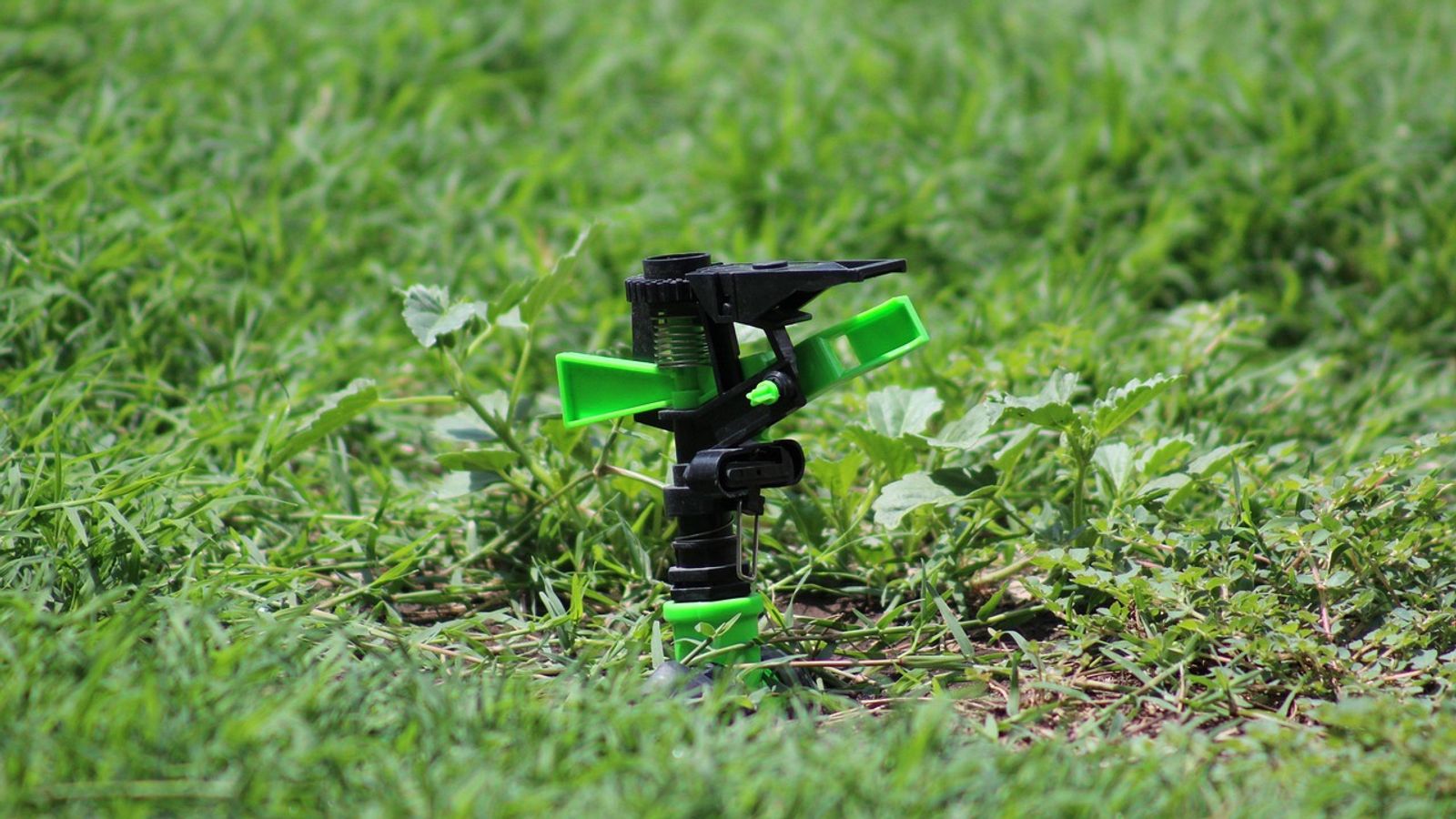
- garden hose with sprinkler
- broom or leaf blower
- calculator
Safety boundary
Stop and reassess if
- Read and follow all instructions on the fertilizer product label—these directions are legally binding and designed to prevent environmental harm
- Wear gloves when handling fertilizer to avoid skin irritation from concentrated salts
- Store fertilizer in a dry location away from children and pets in the original labeled container
- Never apply fertilizer before heavy rain that will wash nutrients into storm drains
- Sweep fertilizer off pavement immediately to prevent water pollution
- Close spreader hopper before stopping or turning to avoid concentrated spills that burn grass
- Water lawn after application to move nutrients into soil and prevent leaf burn
- Check local regulations regarding phosphorus restrictions and application timing near water bodies
- Do not exceed label application rates—more fertilizer does not improve results and causes environmental damage
- Rinse spreader after each use to prevent corrosion and fertilizer caking
Fertilizing a lawn correctly requires understanding what nutrients grass needs, when to apply them, and how much to use. Overapplication wastes money, burns turf, and sends excess nutrients into storm drains and groundwater. Underapplication leaves grass weak and vulnerable to weeds, disease, and dr
Most homeowners can fertilize their own lawns safely with basic equipment and attention to timing. The task involves selecting an appropriate fertilizer formula, calculating the correct amount for your lawn area, calibrating a spreader, and applying the product evenly. You do not need specialized cr
Understanding Fertilizer Numbers and Nutrient Ratios
Every fertilizer bag displays three numbers separated by hyphens, such as 20-5-10 or 32-0-4. These numbers represent the percentage by weight of nitrogen, phosphorus, and potassium in that order. A 50-pound bag of 20-5-10 fertilizer contains 10 pounds of nitrogen, 2.5 pounds of phosphorus, and 5 pou
Nitrogen promotes leaf and stem growth and gives grass its green color. Most established lawns need between 2 and 4 pounds of actual nitrogen per 1,000 square feet per year, divided across multiple applications. Cool-season grasses such as Kentucky bluegrass, perennial ryegrass, and tall fescue typi
Phosphorus supports root development and is especially important for new lawns establishing from seed or sod. Many mature lawns do not need additional phosphorus because decades of fertilization have built up soil levels. Some states and municipalities restrict or ban phosphorus in lawn fertilizer u
Potassium strengthens cell walls, improves drought tolerance, and helps grass withstand cold and disease. Lawns rarely show obvious potassium deficiency symptoms, but maintaining adequate levels supports overall turf health. A balanced fertilizer program includes potassium even when visible results
Timing Applications to Match Grass Growth Cycles
Cool-season grasses grow most actively in spring and fall when soil temperatures range between 50 and 65 degrees Fahrenheit. Apply the majority of your annual nitrogen during these periods. A typical schedule includes a light application in early spring as the grass greens up, a heavier feeding in l
Warm-season grasses thrive when soil temperatures exceed 65 degrees and go dormant in winter. Begin fertilizing warm-season turf in late spring after the grass has fully greened and is actively growing. Continue applications every six to eight weeks through summer, and stop by early fall to allow th
Weather conditions matter as much as calendar dates. Never apply fertilizer before heavy rain, which will wash nutrients into storm drains before grass roots can absorb them. Light rain or irrigation within 24 hours after application helps move granular fertilizer off leaf blades and into the soil,
Measuring Your Lawn Area Accurately
Fertilizer rates are always expressed per 1,000 square feet, so you must know your lawn's area to calculate how much product to buy and apply. For rectangular sections, multiply length by width in feet. A lawn measuring 50 feet by 40 feet contains 2,000 square feet. For irregular shapes, divide the
Subtract areas occupied by buildings, driveways, planting beds, and other non-turf surfaces. Applying fertilizer to pavement wastes product and creates a pollution hazard when rain washes it into storm systems. Many homeowners overestimate lawn area by 20 to 30 percent when they fail to account for
Selecting the Right Fertilizer Type
Quick-release fertilizers contain water-soluble nitrogen that grass can use immediately. They produce rapid greening but require more frequent applications because nutrients leach through the soil quickly. Quick-release products carry higher burn risk if overapplied and contribute more to groundwate
Slow-release or controlled-release fertilizers coat nutrients with materials that break down gradually, feeding grass over 6 to 12 weeks. These products cost more per bag but require fewer applications, reduce burn risk, and minimize nutrient runoff. Many slow-release fertilizers combine quick-relea
Organic fertilizers derived from plant or animal materials release nutrients slowly as soil microbes break them down. They improve soil structure and biology but contain lower nutrient concentrations than synthetic products, requiring larger application volumes. Organic fertilizers work best in warm
Calibrating Your Spreader
Spreader calibration ensures you apply the correct amount of fertilizer across your entire lawn. Broadcast or rotary spreaders throw granules in a wide arc and work well for large, open areas. Drop spreaders release fertilizer in a narrow band directly beneath the hopper and provide more precise con
Most fertilizer bags include spreader settings for common brands and models, but these are starting points, not guarantees. To calibrate, measure a test area of 1,000 square feet—a strip 20 feet wide and 50 feet long works well. Weigh the amount of fertilizer the label recommends for 1,000 square fe
If fertilizer remains in the hopper, you are applying less than the target rate—open the setting slightly and repeat the test. If the hopper empties before you finish the test area, you are overapplying—close the setting and test again. Make small adjustments because spreader settings are not linear
Walking speed affects coverage significantly. Rushing applies less fertilizer per square foot; walking slowly applies more. Maintain a steady, comfortable pace and use the same speed during calibration and actual application. Mark your walking speed by timing how long it takes to cover a known dista
Applying Fertilizer Evenly
Uneven application creates dark green stripes where grass received too much nitrogen and light green or yellow areas that got too little. Start by applying fertilizer around the lawn perimeter, then fill in the interior with parallel passes. Overlap wheel tracks slightly with a broadcast spreader to
Close the spreader hopper before stopping, turning, or crossing pavement to prevent dumping piles of fertilizer that will burn grass or wash into storm drains. Open the hopper only when moving forward at your calibrated walking speed. If you must stop mid-pass, close the hopper first.
Apply half the total fertilizer amount in one direction, then apply the second half in a perpendicular direction. This cross-hatch pattern compensates for minor inconsistencies in spreader throw or walking speed and produces more uniform coverage than a single-direction application.
Watering In and Cleanup
Water the lawn within 24 hours after applying granular fertilizer to dissolve the granules and move nutrients into the root zone. Apply about one-quarter inch of water—enough to wash fertilizer off grass blades but not so much that it creates runoff. If rain is forecast within a day and the predicti
Sweep or blow any fertilizer that lands on sidewalks, driveways, or streets back onto the lawn immediately. Granules left on pavement will wash into storm drains with the next rain, contributing to algae blooms and oxygen depletion in lakes and streams. This cleanup step is not optional—it is an env
Rinse the spreader after each use to prevent corrosion and caking. Fertilizer salts are hygroscopic, meaning they absorb moisture from the air and harden into concrete-like masses if left in the hopper. Clean the spreader over the lawn so rinse water containing residual fertilizer feeds grass rather
Recognizing and Correcting Overapplication
Fertilizer burn appears as brown or straw-colored grass, often in stripes or concentrated patches where overlapping passes or spills deposited too much product. The damage results from fertilizer salts drawing moisture out of grass blades and roots. If you notice burn symptoms within a few days of a
Severe burn may kill grass outright, requiring reseeding or resodding once you have leached the excess fertilizer from the soil. Test soil in burned areas before replanting to confirm salt levels have dropped to safe ranges. Your local extension office can provide soil testing services and interpret
Excessive growth, dark blue-green color, and increased disease or insect problems indicate chronic overfertilization even when burn is not visible. Reduce application rates and frequency if your lawn shows these symptoms. More fertilizer does not always mean better results—grass has a maximum nutrie
When to Call a Professional
Homeowners can handle routine fertilization of residential lawns with basic equipment and careful attention to label directions. However, some situations require professional expertise. If soil testing reveals severe nutrient imbalances, pH problems, or contamination, consult an agronomist or certif
Large properties exceeding one acre become difficult to fertilize evenly with consumer-grade spreaders, and the time investment may not be worthwhile. Commercial applicators use truck-mounted spreaders and GPS guidance systems that ensure uniform coverage across large areas. They also carry liabilit
If your municipality has enacted fertilizer ordinances restricting application timing, nutrient content, or proximity to water bodies, and you are uncertain how to comply, hire a licensed professional familiar with local regulations. Violations can result in fines and mandatory remediation costs tha
Persistent lawn problems that do not respond to proper fertilization may indicate underlying issues such as compacted soil, poor drainage, disease, or insect damage that fertilizer alone cannot fix. A professional lawn care company or extension agent can diagnose these problems and recommend appropr
Sources
Original information
- Homeowner Best Management Practices for the Home Lawn — University of Florida IFAS Extension
- Landscape Irrigation and Fertilization — University of Florida IFAS Extension