
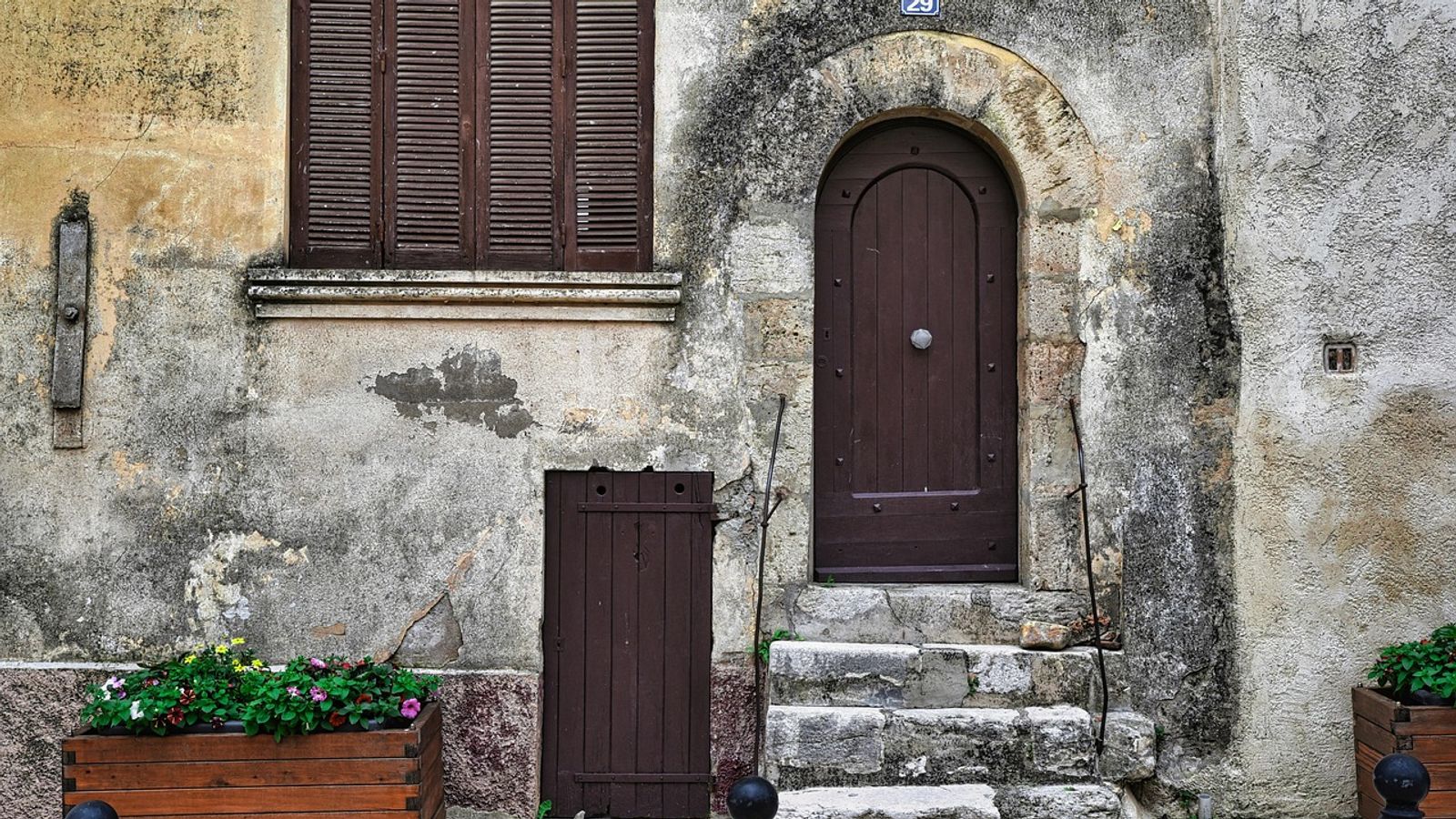
The choice between a prehung door and a slab door depends on whether your existing door frame is square, plumb, and in good condition. A prehung door arrives with the door already mounted in a complete frame assembly, including jambs, hinges, and often the strike plate. A slab door is just the door
Understanding what each product includes helps you assess the work involved. A prehung door unit consists of the door slab, side jambs, head jamb, hinges mortised into both the jamb and door edge, and a pre-drilled hole for the lockset. The jambs are joined at the corners and the door is already hun
When a Prehung Door Makes Sense
Choose a prehung door when the existing frame is damaged, out of square, or when you are framing a new opening. Rot at the threshold or bottom of the side jambs is common in exterior installations and in bathrooms where moisture accumulates. If you see soft wood, dark staining, or crumbling material
Prehung doors also suit homeowners who lack the tools or experience to mortise hinges and bore lockset holes accurately. These operations require a router or sharp chisels, a hole saw or spade bit, and careful layout to ensure the door swings without binding and the latch aligns with the strike. A p
When you change door size or swing direction, a prehung unit simplifies the project. If you want to widen a doorway or reverse the hinge side, you will modify the rough opening and install a new frame regardless. Starting with a prehung assembly ensures all components match and the door operates cor
When a Slab Door Makes Sense
Select a slab door when the existing frame is square, plumb, and undamaged, and you want to replace only the door panel. This situation arises when the door surface is scratched, dented, or outdated but the frame remains solid. Slab replacement preserves the existing jambs, casing, and any custom tr
Slab doors work well for interior applications where moisture and weather are not factors and where the frame has not shifted over time. Measure the existing door height, width, and thickness before ordering a slab. Most interior doors are 1⅜ inches thick; exterior doors are typically 1¾ inches. The
Homeowners comfortable with layout, drilling, and chiseling can save money with a slab door. You will transfer hinge locations from the old door or jamb to the new slab, cut hinge mortises to the correct depth, bore the lockset hole at the proper height and backset, and plane or sand edges for a uni
Comparing Installation Complexity
Installing a prehung door involves removing the old door and frame, preparing the rough opening, setting the new unit, shimming, checking plumb and level, fastening the jambs, and installing trim. You will cut away interior casing and may need to pry out the old jambs and threshold. Exterior install
Installing a slab door requires removing the old door from its hinges, measuring and marking hinge and lockset locations on the new slab, cutting hinge mortises, boring the lockset hole and latch mortise, hanging the door, and adjusting the fit. You may need to plane the top, bottom, or lock edge to
Evaluating Cost and Material Availability
Prehung doors cost more than slab doors because they include the frame, hinges, and factory labor to assemble and hang the unit. A basic interior prehung door may cost fifty to one hundred dollars more than the equivalent slab, while exterior prehung units with weatherstripping and threshold can add
Slab doors offer the lowest material cost when the frame is reusable. You pay only for the door panel and any hardware you choose to replace. This approach makes sense for budget-conscious projects or when you want to match existing trim and jamb profiles that would be difficult to replicate. Availa
Assessing Your Existing Frame Condition
Before deciding, inspect the existing frame carefully. Open and close the door and watch for binding, gaps that vary in width, or a door that swings open or closed on its own. These symptoms indicate the frame is out of plumb or the hinges are loose. Remove the door and examine the jambs for cracks,
Check the frame for square by measuring diagonally from the top corner of one side jamb to the bottom corner of the opposite side jamb, then measure the opposite diagonal. If the measurements differ by more than ⅛ inch, the frame is out of square and fitting a slab will be challenging. Use a level t
Understanding the DIY Boundary
Replacing an interior door with either a prehung unit or a slab is within the capability of a careful homeowner who can measure accurately, use hand and power tools safely, and follow a methodical process. The work does not involve electrical, plumbing, or structural modifications unless you are cha
Exterior door replacement introduces weatherproofing and security considerations. Improper flashing or sealing can lead to water intrusion, rot, and mold. If you are not confident in your ability to install flashing tape, sill pans, and exterior caulking correctly, hire a professional door installer
Fire-rated doors, required in some locations between living spaces and garages or in multi-family buildings, must be installed according to the manufacturer's instructions and local fire codes. Altering a fire-rated door or frame can void the rating. If your project involves a fire-rated assembly, v
Making Your Decision
Start by evaluating the condition of your existing frame and your own skill level. If the frame is damaged, out of square, or you are installing a door in a new opening, a prehung unit simplifies the project and reduces the risk of fit problems. If the frame is sound and square, and you have the too
For exterior applications, prehung doors offer better weatherproofing and are often the only practical choice unless you have professional-level carpentry skills and weatherization knowledge. For interior doors in good frames, slab replacement is a cost-effective way to update appearance without maj
Sources
Original information
- Whole-House Weatherization — U.S. Department of Energy
- Home Safe: Power Tools Checklist — U.S. Consumer Product Safety Commission