
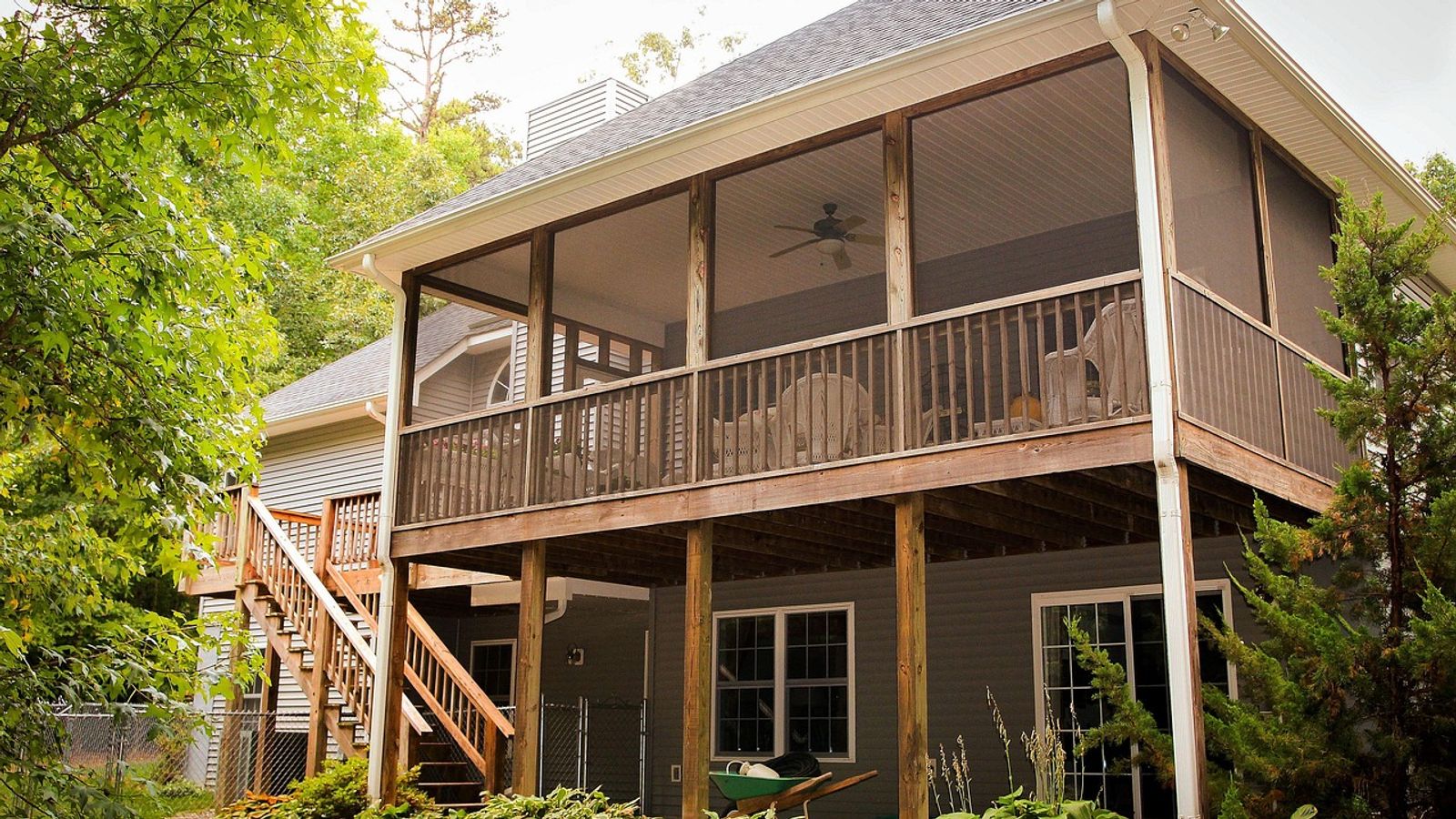
A small front porch occupies a unique position in your home's architecture—it's the first space guests encounter and often the last impression they carry away. Unlike sprawling wraparound porches or deep covered entries, a compact porch measuring six to eight feet deep and eight to twelve feet wide
The challenge with small-porch projects lies in balancing competing priorities. You want the space to feel welcoming rather than cluttered, durable enough to withstand weather exposure, and attractive enough to enhance your home's curb appeal. At the same time, you're working within dimensional cons
Budget-conscious porch improvements fall into several categories: surface treatments that refresh worn flooring or railings, functional additions like seating or storage that make the space more usable, lighting that extends evening use and improves safety, and decorative elements that add personali
Surface Refinishing and Protection
The porch floor and any existing railings form the visual foundation of your entryway. If these surfaces show weathering, peeling paint, or structural wear, addressing them first prevents other improvements from looking out of place. For wood decking in sound structural condition, cleaning followed
Paint delivers complete color coverage and the widest palette of finish options, but it requires more surface preparation than stain. Any existing coating must be scraped or stripped where it's peeling, bare wood needs priming, and the entire surface should be cleaned and allowed to dry thoroughly.
Concrete porch floors offer different refinishing options. Concrete stain penetrates the surface to add color while preserving the natural texture, creating a low-maintenance finish that won't peel or chip. This works best on concrete that's clean and free of previous coatings—stain won't penetrate
Railings present their own considerations. Wooden railings benefit from the same stain or paint treatments as decking, but intricate spindle designs multiply prep time significantly. If your railings are structurally sound but tedious to refinish, consider whether a different improvement might deliv
Flooring Overlays and Alternatives
When existing porch flooring is structurally sound but aesthetically tired, overlay products let you change the appearance without tearing out and replacing the substrate. Interlocking deck tiles—available in wood composite, stone composite, or plastic—snap together over existing concrete or wood su
Wood composite tiles offer a warmer appearance than plastic and better color stability than natural wood, but they cost more than basic plastic grid tiles and less than stone composite options. Installation requires only a clean, level surface and a saw for cutting edge pieces to fit. The primary ma
Outdoor carpet or rug runners provide another overlay option with a completely different aesthetic. Marine-grade outdoor carpet designed for boat decks and pool areas resists moisture, mildew, and fading better than indoor-outdoor carpet sold for covered patios. This distinction matters on a front p
The drawback to any textile floor covering on a front porch is maintenance intensity. Outdoor carpet traps dirt, pollen, and moisture, requiring regular vacuuming or sweeping plus periodic deep cleaning with a carpet cleaner or pressure washer. It also creates a visual boundary that can make a small
Seating and Functional Furniture
Seating transforms a porch from a pass-through space into a destination, but small dimensions demand careful furniture selection. A single bench along the longest wall often works better than multiple chairs, maximizing seating capacity without creating a maze of furniture legs. Built-in benches off
Freestanding benches provide flexibility to rearrange or remove furniture seasonally, and they require no structural modification. Look for benches with narrow depth—fourteen to sixteen inches rather than the standard eighteen to twenty-four inches—to preserve walkway space on a shallow porch. Mater
Resin wicker and all-weather wicker furniture offers the appearance of traditional wicker with better moisture resistance, though quality varies widely across price points. Inexpensive resin wicker uses thin plastic strands over lightweight frames that may not survive high winds or heavy snow loads.
Folding furniture presents another option worth considering. Folding bistro chairs and a small folding table can be set up when you want to use the porch and stored when you need the full width for moving furniture, holiday decorations, or other temporary needs. This flexibility comes at the cost of
Lighting for Safety and Ambiance
Adequate porch lighting serves dual purposes: it illuminates steps and the entry door for safety, and it creates an inviting atmosphere that extends usability into evening hours. Many homes have a single overhead fixture that provides minimal illumination, leaving corners dark and creating harsh sha
Wall sconces flanking the door or mounted on porch posts add light exactly where it's needed without consuming floor space. Installing new wired fixtures requires either running new electrical cable—work that should be performed by a licensed electrician—or replacing existing fixtures with brighter
Solar-powered lights eliminate wiring concerns entirely, though they come with performance tradeoffs. Solar path lights along porch edges or solar sconces on posts provide accent lighting without electrical connections, installation complexity, or operating cost. The limitations are brightness—solar
String lights have become popular for creating ambient porch lighting, and they work particularly well on small porches where a few strands can define the space without overwhelming it. Battery-operated LED string lights offer the easiest installation, requiring only hooks or clips to secure the str
Privacy Screens and Vertical Elements
Small front porches often lack privacy, particularly in neighborhoods with houses close together or porches that face directly onto sidewalks. Adding vertical elements creates separation without the cost and permanence of walls or the maintenance demands of living hedges. Lattice panels attached to
Freestanding privacy screens offer flexibility that attached panels don't—you can reposition them seasonally, move them aside when not needed, or take them with you if you move. Outdoor folding screens in wood, metal, or weather-resistant fabric create instant privacy zones on a porch, though they'r
Tall planters with columnar evergreens or ornamental grasses create living privacy screens that add greenery and seasonal interest. This approach requires ongoing maintenance—watering, fertilizing, seasonal pruning—and the plants need sufficient root space to thrive. Planters on a porch must have dr
Decorative Accents and Seasonal Flexibility
Once functional improvements are in place, decorative elements add personality and seasonal variation without permanent commitment. The key to successful decorating on a small porch is restraint—a few well-chosen pieces create more impact than a crowded collection of accessories. A single statement
Vertical space becomes valuable real estate on a compact porch. Wall-mounted planters, hanging baskets, and window boxes add greenery without consuming floor area. These installations require secure mounting—a hanging basket filled with soil and plants can weigh twenty to thirty pounds when watered—
Seasonal decorating lets you refresh your porch's appearance throughout the year without permanent changes. Swapping door wreaths, changing planter contents, and rotating decorative accents keeps the space current and interesting. The practical consideration is storage—seasonal decorations need prot
Paint color offers another way to transform a porch without structural changes. Repainting the front door in a bold accent color costs minimal money but creates significant visual impact. Painting the porch ceiling a light blue—a traditional choice in some regions—or a contrasting color adds interes
Planning Your Investment
Successful porch improvements start with honest assessment of your priorities, budget, and maintenance capacity. Walk through your front porch and identify what bothers you most—is it the worn flooring, lack of seating, inadequate lighting, or absence of personality? Addressing your primary concern
Set a realistic budget that includes not just materials but also tools you may need to purchase, disposal fees for old materials, and a contingency for unexpected complications. Small-porch projects can range from under one hundred dollars for simple decorative updates to several thousand for compre
Consider the maintenance obligations you're creating with each choice. Low-maintenance improvements—composite deck tiles, vinyl lattice, LED lighting, metal furniture—cost more initially but demand less ongoing attention. Higher-maintenance options—painted wood surfaces, natural fiber textiles, livi
Finally, know when to call in professionals. Structural repairs to porch framing, posts, or foundations require qualified contractors with knowledge of local building codes and proper construction techniques. Electrical work beyond simple fixture replacement should be performed by licensed electrici
Sources
Original information
- Online Permit Submission — City of Jacksonville
- Florida Building Code Resources — Florida Building Commission