
Prepare
Tools and materials
- Bucket or large bowl
- Old towels or rags
- Flashlight
- Adjustable pliers or pipe wrench
- Rubber gloves
- Sink plunger (flat cup)
- Hand-crank drain auger (15+ feet)
- Plastic drain stick or zip-it tool
- White vinegar
- Baking soda
- Wire brush or old toothbrush
- Plumber's tape
- Hex wrench (for garbage disposal)
- Wooden spoon (for disposal check)
Safety boundary
Stop and reassess if
- Do not use chemical drain cleaners in double sinks—they can become trapped and create hazardous conditions when you open drain lines.
- Stop and call a licensed plumber if water backs up from multiple fixtures, you smell sewer gas, or you see leaking or corroded pipes.
- Never use power augers or high-pressure jetting equipment without proper training—they can damage pipes and cause injury.
- Support the trap with one hand when loosening slip nuts to prevent spills and dropped components.
- Do not overtighten slip nuts—hand-tight plus a quarter-turn with pliers is sufficient and prevents cracking.
- Wear rubber gloves when handling drain components and debris.
- If you have PVC pipes with visible cracks or damage, do not proceed with mechanical clearing.
- Do not disassemble garbage disposal connections if you are unfamiliar with disposal plumbing.
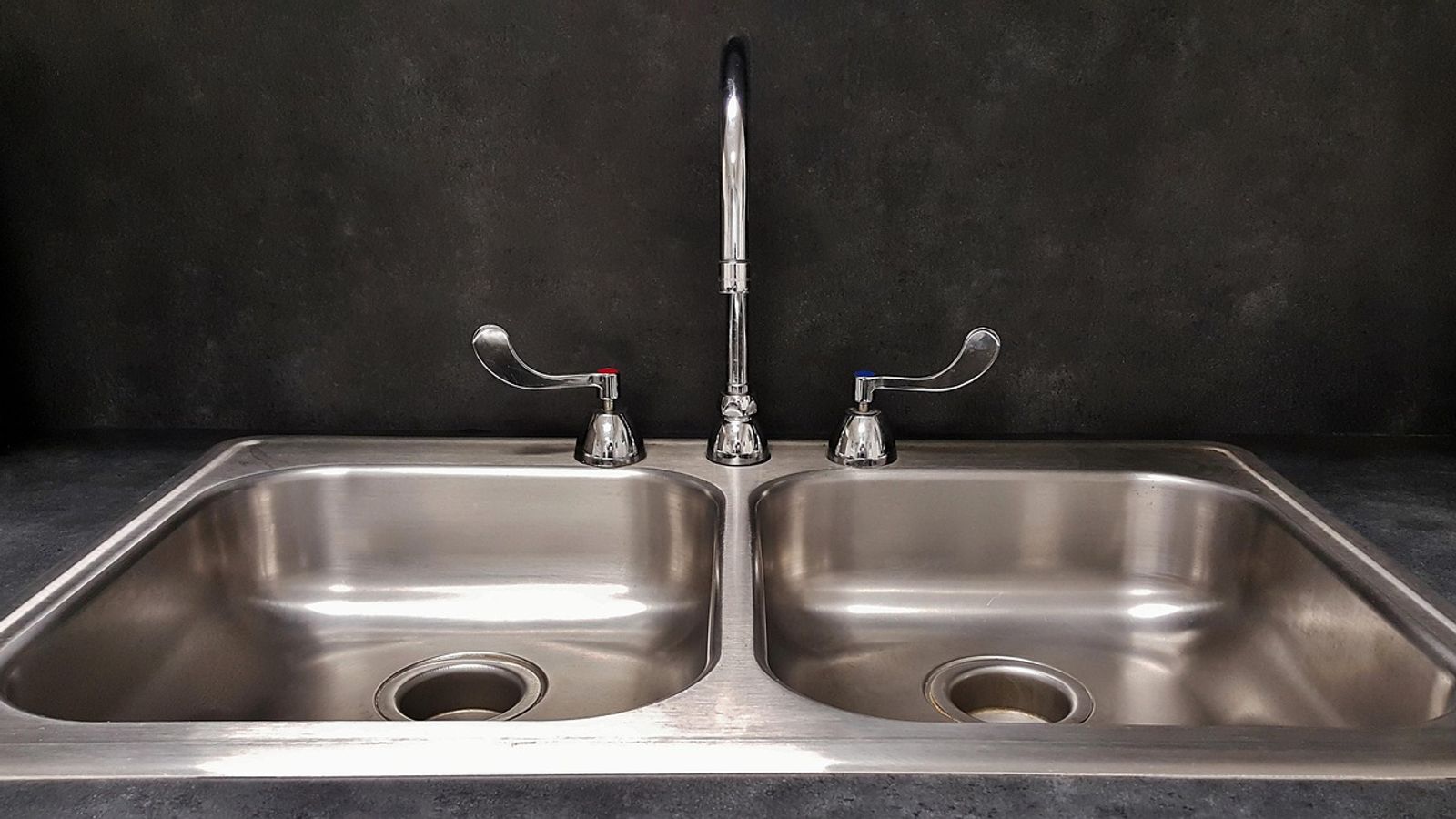
Water backing up into the opposite basin of a double sink means the shared drain line downstream of both basins is partially obstructed. When you run water in one side, it flows down that basin's tailpiece, encounters the blockage in the common drain, and rises through the only available path—the ot
The most common culprit is accumulated grease, food particles, soap residue, and debris lodged in the horizontal drain pipe that connects both basins to the main drain stack. In kitchens with a garbage disposal on one side, the clog often forms just past the disposal outlet or in the shared trap ass
Identifying the Clog Location
Before you begin work, determine where the obstruction sits. Fill one basin with two inches of water, then pull the stopper and watch what happens. If water immediately backs up into the opposite basin, the clog is close to the junction point. If water drains slowly from the first basin before appea
Check whether both basins drain equally poorly or if one side drains normally when the other is empty. If only one basin drains slowly when used alone, that basin's individual tailpiece or trap may be clogged rather than the shared line. When both basins drain poorly individually and water crosses b
Look under the sink to identify your drain configuration. Most double sinks use one of three setups: a center tee where both tailpieces meet at a single trap, an end-outlet design where one basin drains into the other's tailpiece before a single trap, or a continuous waste system with a trap on each
Tools and Materials You'll Need
Gather a bucket or large bowl to catch drain water, old towels or rags for spills, a flashlight, adjustable pliers or a pipe wrench, and rubber gloves. For clearing the clog, have a sink plunger (flat cup, not the flanged toilet type), a hand-crank drain auger with at least fifteen feet of cable, a
If your sink has a garbage disposal, you'll also want the disposal wrench that came with the unit or a standard hex wrench that fits the manual rotation socket on the disposal bottom. Have a wooden spoon or similar non-metal tool to check the disposal interior for jams. Do not use chemical drain cle
Safety Boundaries and When to Stop
This work involves disassembling drain traps and using mechanical clearing tools in accessible drain lines. You can safely perform these tasks if the blockage is in the trap assembly or the horizontal drain pipe you can reach under the sink. Stop and contact a licensed plumber if you encounter any o
Do not attempt to clear blockages in the main drain stack, vent pipes, or any plumbing inside walls or floors. Do not disassemble garbage disposal drain connections if you are unfamiliar with disposal plumbing—the weight and sharp internal components create injury risk. If your building has a septic
Never use a power auger or high-pressure water jetting equipment unless you are trained in their use—these tools can damage drain pipes, create dangerous kickback, or cause serious injury. If you have PVC drain pipes and notice cracks, loose joints, or any damage, do not proceed with mechanical clea
Clearing the Blockage
Start with the least invasive method. Remove any standing water from both basins using a cup or sponge so you can see the drain openings. If one side has a garbage disposal, fill that basin with three inches of water, place a sink plunger over the disposal drain opening, and hold a wet rag tightly o
For sinks without a disposal or if plunging fails, place your bucket under the trap assembly and use adjustable pliers to loosen the slip nuts connecting the trap to the tailpieces and drain arm. Trap slip nuts turn counterclockwise. Support the trap with one hand as you remove the nuts to prevent s
If the trap is clear, the blockage is in the drain arm or farther into the branch line. Insert a hand-crank auger into the drain arm opening, feeding the cable while turning the handle clockwise. When you feel resistance, continue cranking to break through or hook the obstruction, then slowly withdr
For clogs in the tailpiece or just below the basket strainer, use a plastic drain stick or zip-it tool. Insert it down the drain opening from above, push it as far as it will go, then slowly withdraw while twisting. The barbed edges catch hair and debris. This method works particularly well in bathr
Once you've cleared the visible obstruction, reassemble the trap. Clean the slip nut threads and the pipe ends with a wire brush to remove old debris and ensure a good seal. Hand-tighten the slip nuts first, then use pliers to snug them an additional quarter-turn—overtightening can crack the nuts or
Testing and Verification
With the trap reassembled, run hot water in one basin for thirty seconds and watch the opposite basin. The water should drain quickly without any backup. Repeat the test from the other basin. Fill both basins simultaneously, then pull both stoppers at once—the water should drain smoothly without gur
Check all the connections you disturbed for leaks. Look directly at each slip nut joint while water is running and use a dry paper towel to wipe under each connection—even a small drip will show on the paper. If you find a leak, drain the sink, loosen the nut, check that the washer is properly seate
Troubleshooting Persistent Problems
If water still backs up after you've cleared the accessible drain and verified the trap is clean, the blockage is in the branch drain line inside the wall or floor. This section requires a longer auger or professional drain-cleaning equipment. A licensed plumber has powered augers and inspection cam
When both basins drain slowly but don't cross-flow into each other, the problem may be inadequate venting rather than a physical clog. Drain systems require air from vent pipes to flow properly. A blocked or improperly installed vent creates a vacuum that slows drainage. Vent diagnosis and repair re
If you clear a clog successfully but it returns within days or weeks, you're treating a symptom rather than the cause. Recurring clogs indicate improper drain slope, a partially collapsed pipe, tree root intrusion in outdoor drain lines, or habits that introduce excessive grease or debris. A plumber
Gurgling sounds from the drain even when water flows properly suggest a venting issue or a partial clog forming farther downstream. Address these warning signs before they become complete blockages. If you notice slow drainage in other fixtures when you use the double sink, the problem is in shared
Preventing Future Backups
Regular maintenance prevents most double-sink backups. Install mesh drain screens in both basins to catch food particles and debris before they enter the drain. Never pour cooking grease or oil down the sink—let it solidify in a container and dispose of it in the trash. Run hot water for fifteen sec
Once monthly, remove the drain screens and clean them thoroughly. Every three months, remove and clean the trap assembly even if the sink is draining normally—this prevents gradual buildup that eventually causes blockages. For garbage disposals, run cold water before, during, and for fifteen seconds
The baking soda and vinegar method provides gentle maintenance cleaning but will not clear existing clogs. Pour half a cup of baking soda down each drain, follow with one cup of white vinegar, wait fifteen minutes while the mixture fizzes, then flush with hot water. This helps dissolve soap residue
When to Call a Licensed Plumber
Contact a licensed plumber if the clog persists after you've cleared the trap and augered the accessible drain line, if water backs up from floor drains or other fixtures when you use the sink, if you see water leaking from pipes inside walls or ceilings, or if the drain pipes show corrosion, cracks
Call for professional help if you smell sewer gas even after filling the traps with water, if you hear gurgling from multiple fixtures, or if the building has a septic system and multiple drains are slow—these indicate problems beyond a simple sink clog. If your home was built before 1990 and has ne
In multi-unit buildings, building management should arrange for plumbing service, as the problem may be in shared drain lines that serve multiple units. If you've recently had plumbing work done and backups started afterward, contact the plumber who performed the work—improper installation or debris
Sources
Original information
- How to Care for Your Septic System — U.S. Environmental Protection Agency
- WaterSense Home Maintenance — U.S. Environmental Protection Agency