
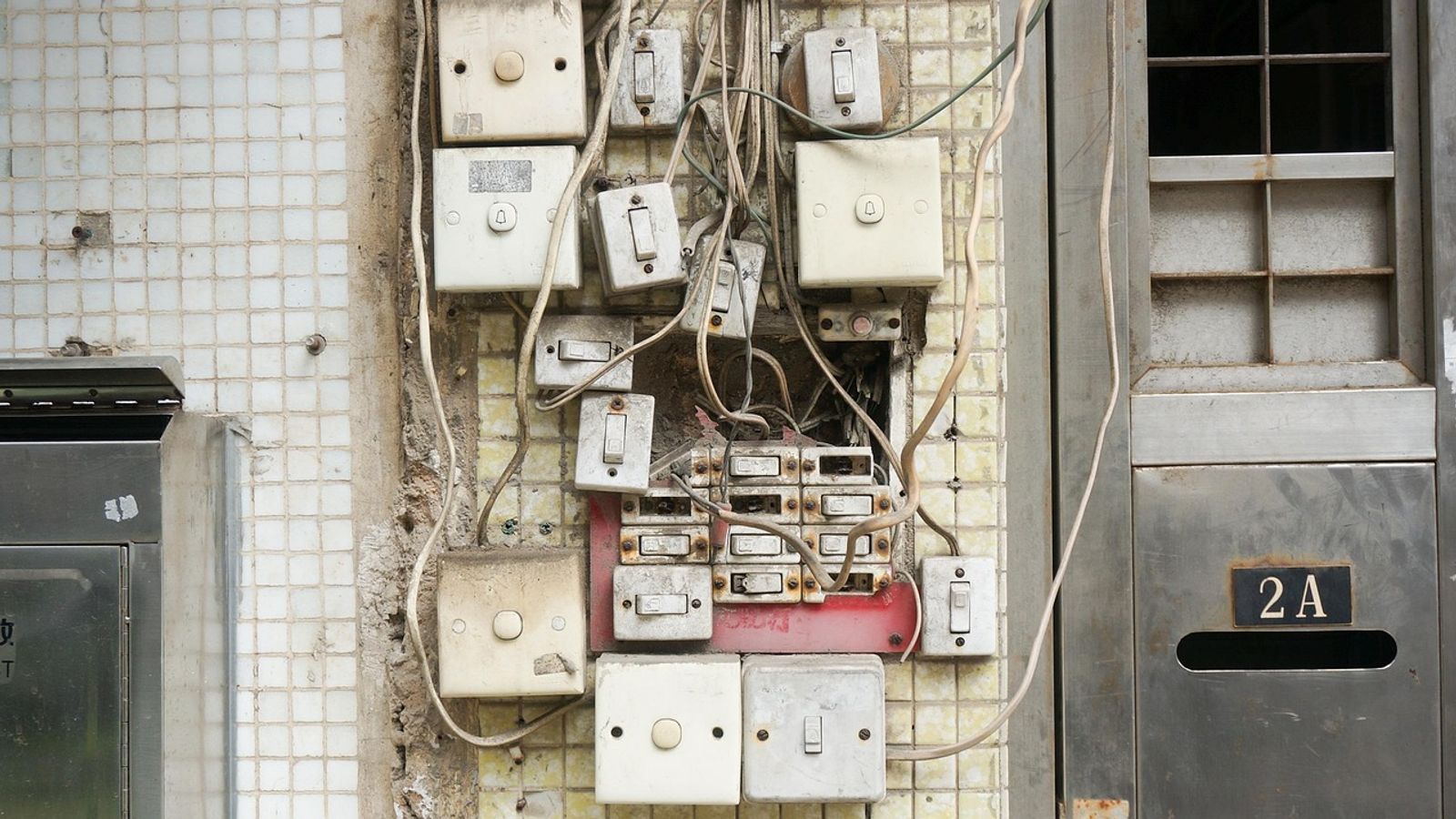
Safety boundary
Stop and reassess if
- Never attempt to reset a breaker more than once if it trips immediately with no load connected—this indicates a dangerous wiring fault that requires a licensed electrician.
- Do not replace a circuit breaker with one of higher amperage without professional verification that the wire gauge can safely handle the increased current.
- Call a licensed electrician immediately if you smell burning plastic, see scorch marks, observe sparks, or hear buzzing sounds from your electrical panel.
- Turn off the main breaker and call an electrician if multiple breakers trip simultaneously or if the main breaker trips.
- Never touch the electrical panel, outlets, or switches with wet hands or while standing on a wet surface.
- Do not open the electrical panel cover beyond viewing the breaker positions—all work inside the panel requires a licensed electrician.
- Evacuate your home and call 911 if you observe smoke or flames from any electrical component.
- Avoid using multiple power strips or extension cords to connect high-wattage appliances, as this concentrates dangerous loads on single circuits.
- Federal Pacific Electric and Zinsco electrical panels have documented safety issues—have a licensed electrician evaluate these panels.
- Any electrical work beyond identifying overloaded circuits requires a licensed electrician and may require permits from your local authority having jurisdiction.
A circuit breaker that keeps tripping is doing exactly what it was designed to do: protect your home from electrical overload, short circuits, or ground faults that could cause fires or equipment damage. The breaker interrupts power flow when it detects unsafe conditions, and repeated tripping means
Understanding why your breaker trips repeatedly helps you determine whether you can address the problem yourself or need to contact a licensed electrician. Some causes involve simple load management that any homeowner can handle, while others involve hazardous conditions that only qualified professi
What Causes a Circuit Breaker to Trip Repeatedly
Circuit breakers trip for three primary reasons: overloaded circuits, short circuits, and ground faults. Each condition creates a different electrical signature that triggers the breaker's protective mechanism. Identifying which condition affects your circuit determines the appropriate response and
An overloaded circuit occurs when the total amperage demand from all devices and appliances on a single circuit exceeds the breaker's rated capacity. Most household circuits are rated for 15 or 20 amperes, and plugging in too many devices simultaneously forces more current through the wiring than it
A short circuit happens when a hot wire touches a neutral wire or another hot wire, creating a path of extremely low resistance. This allows a massive surge of current to flow instantly, generating heat and sparks. The breaker trips within milliseconds to prevent fire. Short circuits typically resul
Ground faults occur when a hot wire contacts a ground wire or a grounded surface such as a metal electrical box or water pipe. Like short circuits, ground faults create an unintended low-resistance path that allows dangerous current flow. Ground fault circuit interrupter (GFCI) breakers and arc faul
What Homeowners Can Safely Check
Before calling an electrician, you can perform several safe diagnostic steps that may identify an overloaded circuit or a faulty appliance. These checks involve no contact with electrical wiring or components inside the panel, outlets, or switches. If your investigation reveals anything beyond a sim
Start by identifying which circuit keeps tripping. Open your electrical panel and locate the breaker in the tripped position, which typically sits between the full ON and full OFF positions or shows a red or orange indicator. Note the circuit label if your panel is properly marked. If the panel lack
With everything disconnected, reset the breaker by pushing the handle firmly to the OFF position, then back to ON. If the breaker trips immediately without any load connected, you have a short circuit or ground fault in the wiring itself, and you must call a licensed electrician. Do not attempt to r
Reconnect devices one at a time, waiting a few minutes between each addition. When the breaker trips, the last device you connected is either faulty or pushed the total load beyond the circuit's capacity. If a single appliance causes the trip, unplug it and have it inspected or replaced. If the brea
Calculate the total amperage demand to verify an overload. Check the nameplate on each appliance for its amperage or wattage rating. If only wattage is listed, divide watts by 120 volts to determine amperage. Add the amperage of all devices on the circuit. If the total approaches or exceeds the brea
When to Call a Licensed Electrician Immediately
Certain conditions require immediate professional attention and fall completely outside the scope of homeowner troubleshooting. Do not attempt to diagnose or repair these situations yourself. Electrical work beyond simple load management involves serious shock and fire hazards and typically requires
Call a licensed electrician immediately if the breaker trips with no load connected, indicating a fault in the wiring itself. Also contact a professional if you smell burning plastic or see scorch marks on the breaker, panel, outlets, or switches. These signs indicate overheating that has already da
Any situation involving a GFCI or AFCI breaker that trips repeatedly requires professional diagnosis. These sensitive devices detect conditions that standard breakers cannot, and troubleshooting them requires specialized testing equipment and knowledge of current electrical codes. Similarly, if mult
Flickering lights throughout the house, buzzing sounds from the panel, or a burning smell anywhere in your electrical system are emergency conditions. Shut off the main breaker if you can do so safely, and call an electrician immediately. Do not wait to see if the problem resolves itself. If you obs
Older homes with outdated electrical systems present special concerns. If your home has a fuse box rather than circuit breakers, or if your panel contains breakers from manufacturers no longer in business, replacement parts may not meet current safety standards. Federal Pacific Electric (FPE) and Zi
Understanding Your Electrical Panel and Breaker Ratings
Your electrical panel distributes power from the utility service to individual circuits throughout your home. Each circuit breaker protects a specific circuit by monitoring current flow and interrupting power when unsafe conditions occur. The number printed on the breaker handle indicates its ampera
The wire gauge in your walls must match the breaker rating. A 15-ampere circuit uses 14-gauge wire, while a 20-ampere circuit requires 12-gauge wire. Never replace a breaker with one of higher amperage without verifying that the wire gauge can safely handle the increased current. Installing an overs
Modern electrical codes require AFCI protection for most living areas and GFCI protection for bathrooms, kitchens, garages, basements, and outdoor circuits. These specialized breakers cost more than standard breakers but provide essential protection against specific hazards. AFCI breakers detect arc
Long-Term Solutions for Overloaded Circuits
Once you have identified an overloaded circuit, you have several options for permanent solutions. The simplest approach is to redistribute your electrical load by moving some devices to outlets on different circuits. Use a circuit tester or the process of elimination to identify which outlets in you
For rooms where you consistently need more power than existing circuits provide, a licensed electrician can install additional circuits. This involves running new wiring from the panel to new outlets, installing a new breaker, and ensuring all work complies with current electrical codes. Depending o
If your electrical panel has no space for additional breakers, or if your total household electrical demand exceeds your service capacity, you may need a panel upgrade or service upgrade. A panel upgrade replaces your existing panel with a larger one that accommodates more circuits. A service upgrad
Maintaining Your Electrical System
Regular attention to your electrical system helps prevent problems before they cause breaker trips. Avoid overloading outlets by limiting the number of devices plugged into each receptacle. Power strips and surge protectors do not increase the circuit's capacity—they simply provide more plug points
Inspect visible electrical components periodically for warning signs. Outlets or switches that feel warm, produce buzzing sounds, or show discoloration indicate problems that require professional attention. Flickering lights, dimming when appliances start, or frequent bulb failures suggest loose con
Have a licensed electrician inspect your electrical system if your home is more than 40 years old, if you are planning major renovations, or if you are adding large appliances or electric vehicle charging equipment. Older wiring may not meet current safety standards, and aluminum wiring, common in h
A circuit breaker that keeps tripping is never a nuisance to ignore or bypass. The breaker protects your home from conditions that cause electrical fires and equipment damage. While homeowners can safely identify overloaded circuits and redistribute electrical loads, any situation involving wiring f
Sources
Original information
- Home Electrical Safety Checklist — U.S. Consumer Product Safety Commission